
Southern Croatia Road Trip: Bosnia & Montenegro

Southern Croatia is one of Europe’s most rewarding road trip destinations.
On this journey, we flew into Zadar and travelled south through Trogir, Split, Brač Island, Bol, Zlatni Rat, and Makarska before crossing into Bosnia & Herzegovina and Montenegro.
After exploring Mostar, Budva, Kotor, Sveti Stefan, and Jaz Beach, we returned to Croatia and finished our trip in Dubrovnik, staying in the peaceful coastal village of Mlini.
Rather than a rigid itinerary, this route is designed as a flexible coastal journey through Croatia and the Balkans, combining:
- Cities
- Islands
- Coastal drives
- Inland cultural stops
- Multi-country extensions
This guide combines the entire route into one practical itinerary, helping you plan a Southern Croatia road trip while showing where Bosnia and Montenegro fit naturally into the journey.
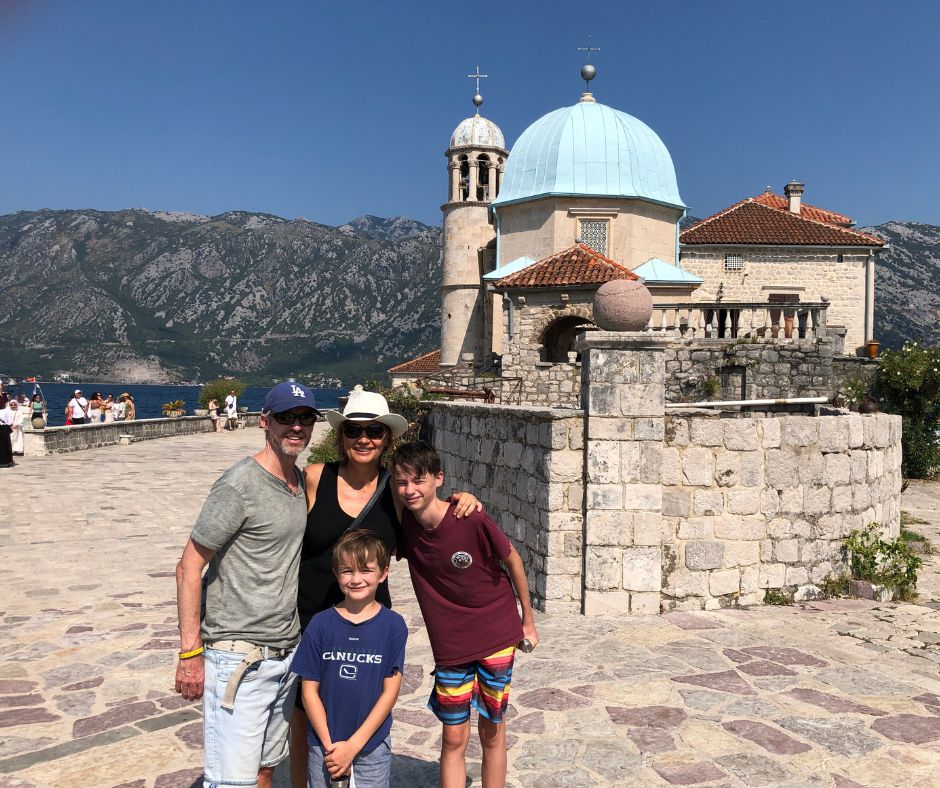
Family photo on Church of Our Lady of Škrpjela.
The Full Route Overview (Zadar → Dubrovnik + Balkans Extension)
Our journey followed this route:
- Zadar (entry point)
- Trogir / Okrug Gornji
- Split (main hub)
- Brač Island (Milna)
- Bol & Zlatni Rat Beach
- Makarska (coastal mountains)
- Mostar (Bosnia & Herzegovina)
- Budva (Montenegro base)
- Kotor, Sveti Stefan, Jaz Beach
- Dubrovnik
- Mlini (quiet Dubrovnik base alternative)
This is one of the most complete Southern Europe coastal road trip routes, combining three countries in one continuous journey.
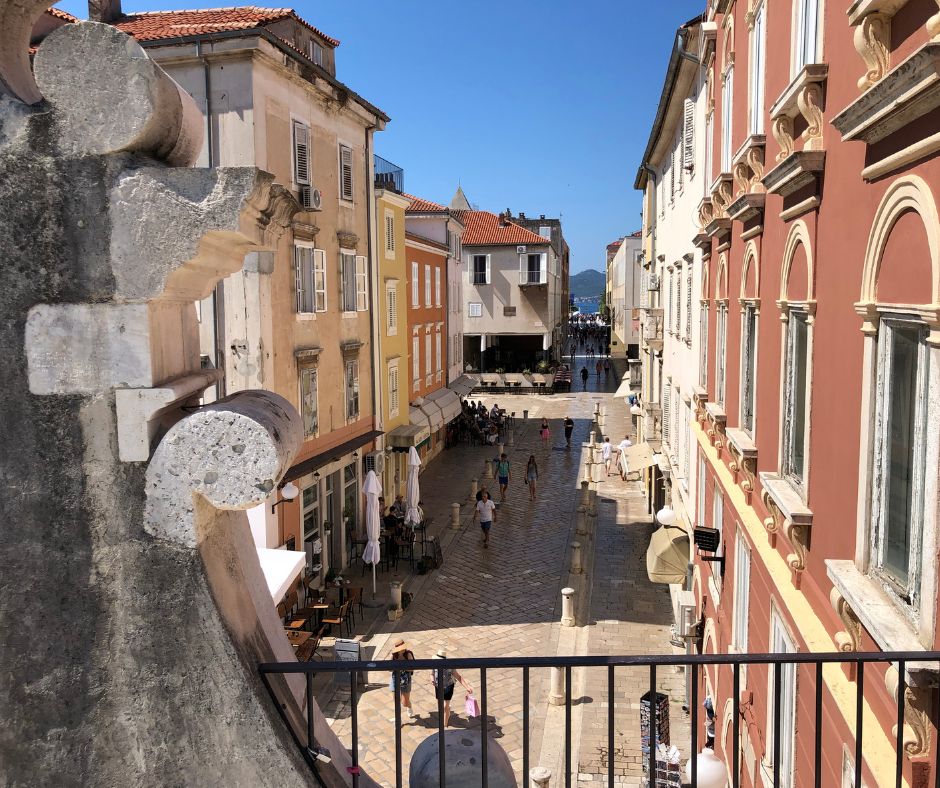
Looking down on Zadar’s Old Town from the Walls above
Southern Croatia Part A: The Dalmatian Coast
The first half of our journey focused on Croatia’s stunning Dalmatian Coast, beginning in Zadar and continuing south through Trogir, Okrug Gornji, Split, Bol, Zlatni Rat, and Makarska.
This section of the trip combined historic coastal cities, UNESCO-listed old towns, crystal-clear Adriatic waters, and some of Croatia’s most famous beaches.
Using Okrug Gornji as our base for five days allowed us to explore the surrounding region at a relaxed pace before continuing further south along the coast.
Zadar: The Best Entry Point to Croatia
Our Southern Croatia adventure began with a Ryanair flight from Berlin to Zadar.
After spending several weeks travelling through Europe, landing on Croatia’s Dalmatian Coast felt like the start of something completely different.
What immediately stood out was how relaxed Zadar felt. Unlike Dubrovnik or Split, which often dominate Croatia itineraries, Zadar offered a much gentler introduction to the country.
There were tourists around, but the city still felt authentic and easy to navigate, making it an ideal place to begin a road trip through Southern Croatia.
With only a day to explore before continuing south, we spent our time wandering through the historic Old Town, walking the waterfront promenade, and simply soaking up the atmosphere.
The compact layout made it easy to explore on foot, and the mix of Roman ruins, medieval architecture, and coastal views gave us our first taste of what makes Croatia so special.
One of the things we enjoyed most about Zadar was that it didn’t feel like a city that was trying too hard to impress visitors. Instead, it felt lived in.
Locals gathered along the waterfront, cafés spilled onto the streets, and the pace of life seemed noticeably slower than many of Europe’s more famous tourist destinations.
Later that afternoon, we boarded a bus and continued south to Okrug Gornji, beginning our journey down the Dalmatian Coast.
Looking back, Zadar was the perfect starting point.
It allowed us to ease into Croatia rather than being thrown straight into the crowds and energy of the country’s busiest destinations.
Why start in Zadar?
- Less crowded than Split or Dubrovnik
- Beautiful and walkable historic Old Town
- Easy access to Southern Croatia by road or bus
- Relaxed atmosphere for first-time visitors
- Excellent entry point for a Croatia road trip itinerary
Related guide:
Exploring Zadar’s Old City
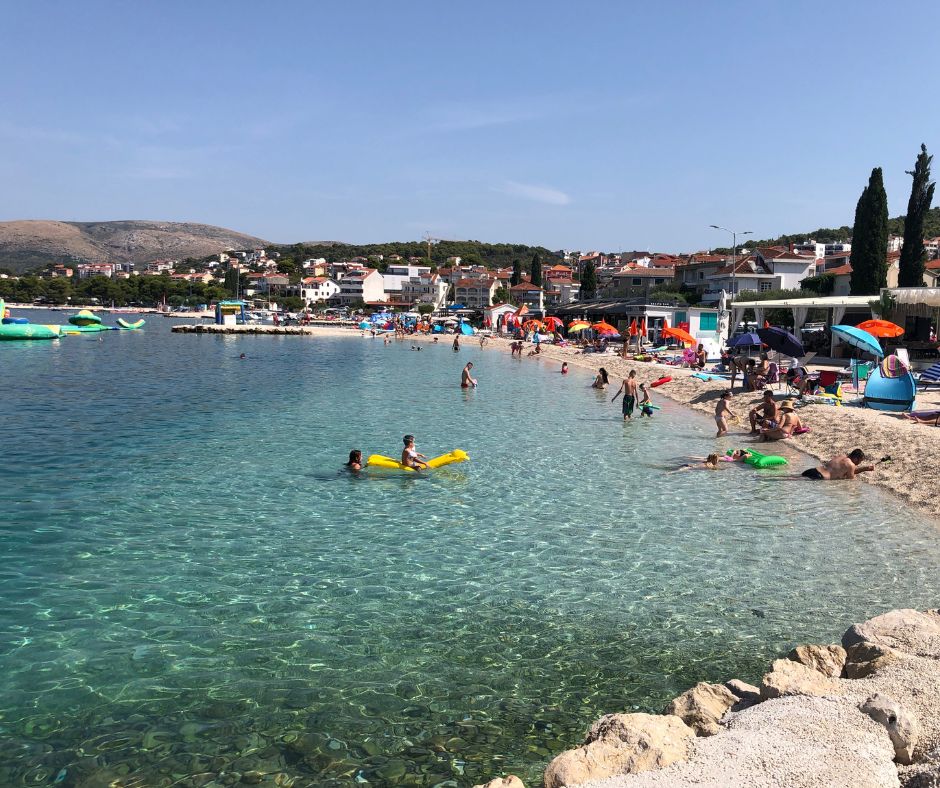
Best beach in Okrug Gronji, Copacabana Beach
Okrug Gornji and Trogir: Our Base for Exploring Southern Croatia
After arriving in Zadar, we travelled south by bus to Okrug Gornji, where we spent the next five days using it as our base to explore some of Southern Croatia’s most popular destinations.
Looking back, choosing Okrug Gornji was one of the best decisions we made during our Croatia trip.
While many travellers immediately head to Split, we found Okrug Gornji offered a much more relaxed and affordable alternative.
Located on the island of Čiovo and connected to the mainland by bridge, it provided easy access to nearby attractions while allowing us to return each evening to a quieter coastal setting.
During our stay, we explored the historic streets of Trogir, spent time wandering through Split’s Old Town, and made our way across to Bol and Zlatni Rat Beach on Brač Island.
Having a single base meant we didn’t have to constantly pack and unpack our bags, making the first part of our Croatia itinerary feel far more relaxed.
That said, if I had my time again, I would probably split our stay and spend a few nights in Bol as well. While Okrug Gornji worked brilliantly as a base, Bol was one of those places that instantly makes you want to stay longer. The crystal-clear water, laid-back atmosphere, and stunning setting around Zlatni Rat Beach made it one of the highlights of our entire Croatia trip. Visiting as a day trip was fantastic, but leaving at the end of the day felt far too soon. One of the things we loved most about Okrug Gornji was how it balanced convenience with a genuine holiday atmosphere. Mornings often started with views across the Adriatic, while evenings were spent strolling along the waterfront after returning from a day of exploring. For travellers with more time, I would recommend doing what we didn’t: use Okrug Gornji as your mainland base, then spend a few nights on Brač Island, particularly in Bol. It gives you the best of both worlds, easy access to Split and Trogir, while also allowing you to fully experience one of Croatia’s most beautiful island destinations. Why stay in Okrug Gornji?
- Excellent base for exploring Southern Croatia
- Easy access to Trogir, Split, and Brač Island
- More affordable accommodation than Split
- Relaxed beach atmosphere
- Beautiful Adriatic views and waterfront walks
- Less crowded than Croatia’s major tourist centres
Why visit Trogir?
- UNESCO World Heritage-listed Old Town
- Historic architecture and narrow stone streets
- Excellent restaurants and waterfront cafés
- Easy day trip from Split or Okrug Gornji
- One of the most charming towns on the Dalmatian Coast
Related Guides Family Friendly Trogir Exploring Okrug Gornji
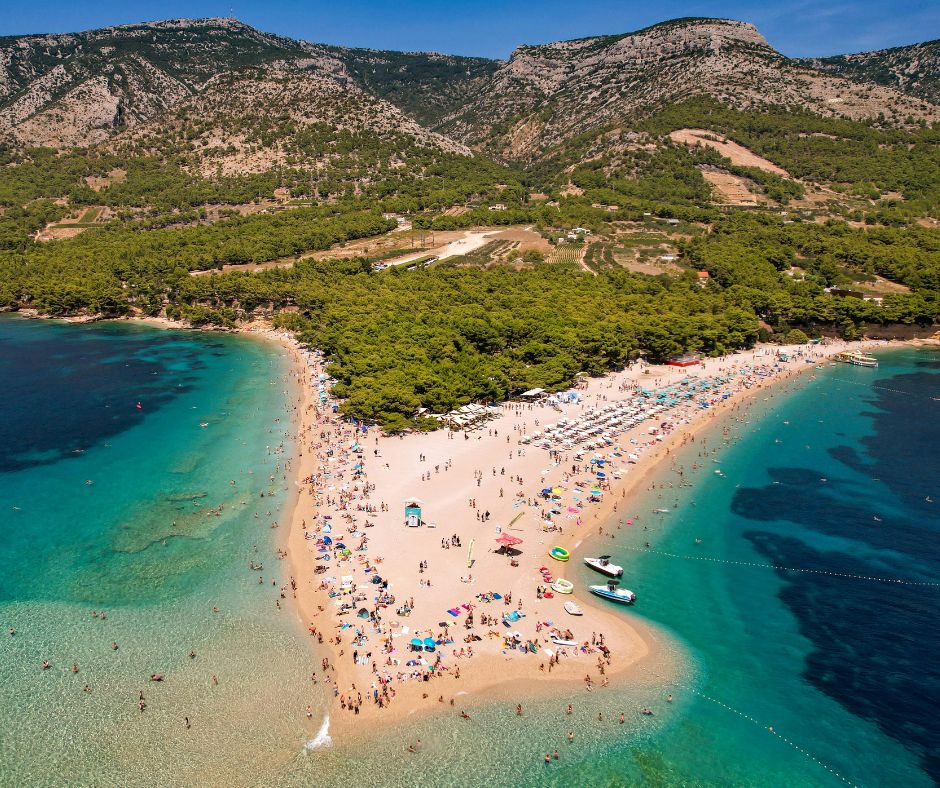
Zlatni Rat Beach
Split: The Gateway to the Croatian Islands
While staying in Okrug Gornji, we spent a day exploring Split, Croatia’s second-largest city and the gateway to many of the country’s most famous islands. Before arriving, I expected Split to be little more than a transport hub, a place people pass through on their way to Hvar, Brač, or other Adriatic islands. In reality, it turned out to be a destination worth exploring in its own right. The city has a completely different energy compared to Trogir or Okrug Gornji. The waterfront promenade buzzes with activity, ferries come and go throughout the day, and the historic centre is filled with travellers heading off on their next adventure. At the heart of Split is Diocletian’s Palace, a UNESCO World Heritage site that feels less like a museum and more like a living city. Shops, cafés, restaurants, and apartments sit within ancient Roman walls, creating one of the most unique urban environments we’ve experienced in Europe. One of the things that stood out most was how naturally history and modern life blend together. Around every corner seemed to be another hidden courtyard, stone alleyway, or centuries-old building still being used today. As we wandered through the Old Town and along the waterfront, it became obvious why Split is considered the heart of Southern Croatia travel. Almost every island adventure, ferry route, or coastal itinerary seems to pass through here. Why Split matters
- Gateway to Croatia’s island network
- Home to Diocletian’s Palace
- Vibrant waterfront atmosphere
- Excellent restaurants and cafés
- Easy day trip from Trogir or Okrug Gornji
- Essential stop on most Southern Croatia itineraries
For us, Split wasn’t the highlight of the trip, but it was the place where we truly understood how connected Croatia’s coastline and islands are. It acts as the bridge between mainland Croatia and the Adriatic islands beyond. Related Guides: Top 11 Unforgettable Things to Do in Split with Kids
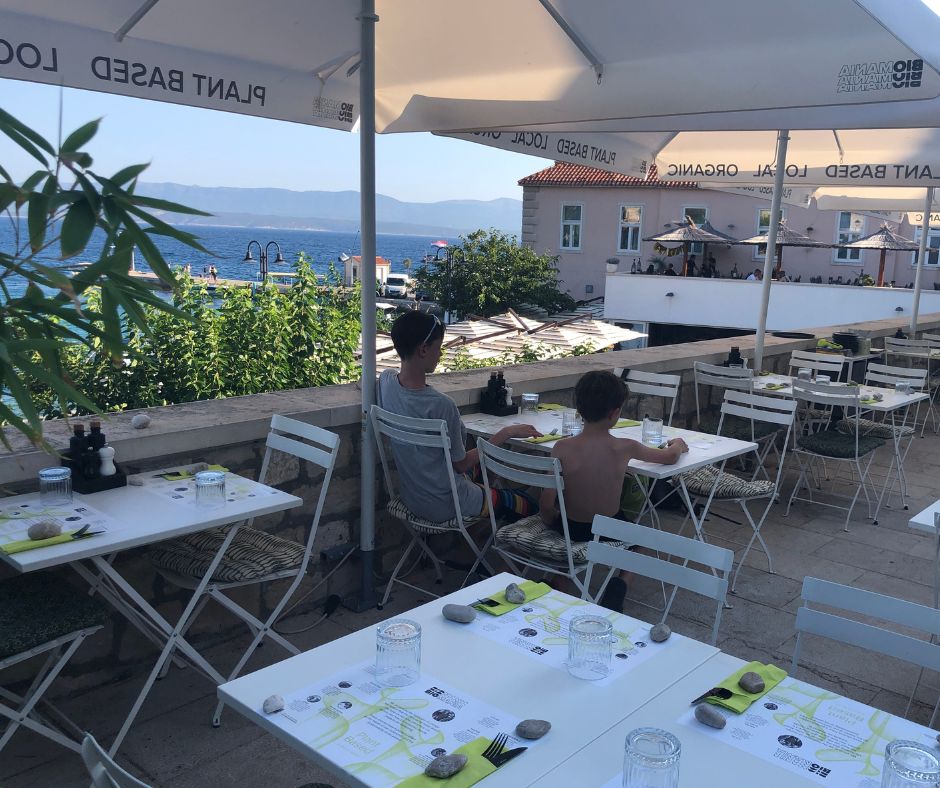
Sitting in Biomania restaurant in Bol looking across at the Adractic
Bol & Zlatni Rat: Croatia’s Most Iconic Beach
If there was one place during our Croatia trip that surprised us the most, it was Bol and Zlatni Rat Beach on Brač Island. We visited as a day trip from Okrug Gornji, and within a few hours of arriving, we realised we had made one mistake, we should have stayed longer. Bol has a completely different feel from the mainland. The pace is slower, the water somehow seems even clearer, and there’s an unmistakable island atmosphere that immediately makes you relax. The town itself is charming, with a beautiful waterfront lined with cafés and restaurants, but the main attraction is undoubtedly Zlatni Rat Beach. Often referred to as the most famous beach in Croatia, Zlatni Rat is known for its distinctive shape, which changes slightly depending on currents, wind, and sea conditions. Stretching out into the Adriatic like a narrow peninsula, it’s one of the most photographed natural landmarks in the country. What surprised us most wasn’t the shape of the beach though, it was the colour of the water. The crystal-clear turquoise sea looked almost unreal in places and made it difficult to leave at the end of the day. If I were planning this itinerary again, I would still use Okrug Gornji as a base, but I would definitely spend a few nights in Bol. A day trip allowed us to experience the highlights, but it didn’t feel like enough time to fully appreciate one of the most beautiful places we visited in Croatia. Why visit Bol & Zlatni Rat
- Home to Croatia’s most famous beach
- Crystal-clear Adriatic waters
- Relaxed island atmosphere
- Excellent swimming and water sports
- Easy day trip from Split or Okrug Gornji
- Perfect place to slow down and enjoy island life
For many travellers, Zlatni Rat is simply a beach stop. For us, it became one of the standout memories of the entire trip and the place we most wished we had spent longer exploring. Related Guides: Bol, Croatia: Why You Must Visit Discover the Magic of Zlatni Rat Beach: Croatia’s Golden Horn
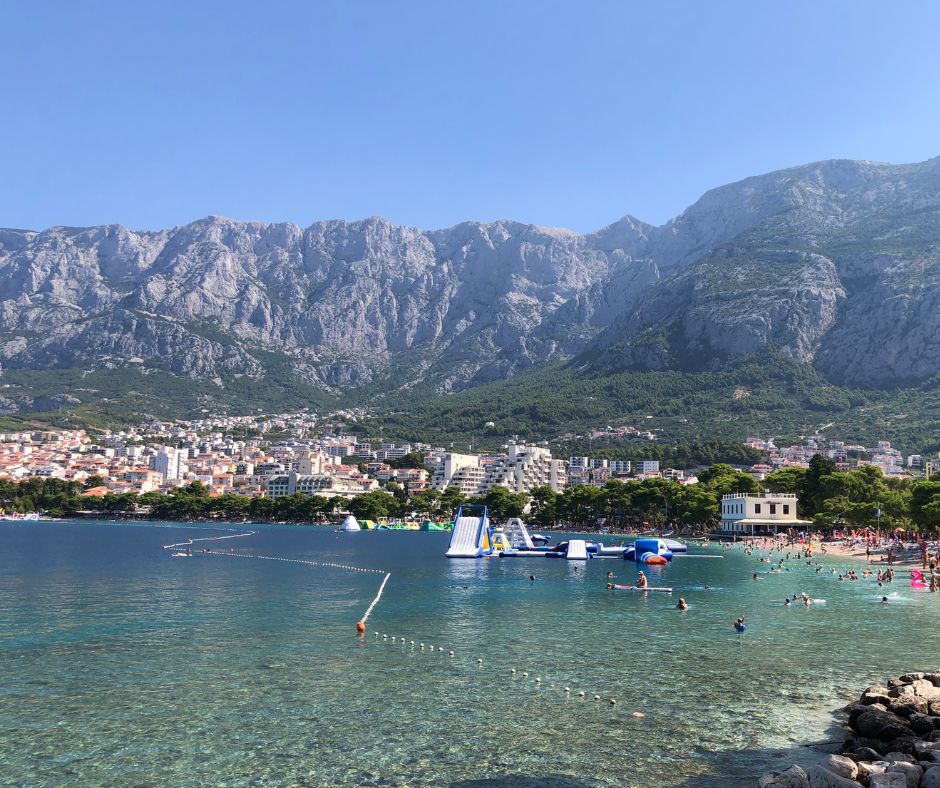
Over looking the beautiful beach of Makarska with the Biokovo Mountains in the background
Makarska: Where Mountains Meet the Sea
We came to Makarska on a friend’s recommendation and decided to spend a couple of nights there as part of our journey down the Dalmatian Coast. Set at the base of the Biokovo mountains, Makarska is immediately striking. The contrast between the dramatic mountain backdrop and the deep blue Adriatic coastline makes it one of the most visually impressive coastal settings we visited in Croatia. On first impression, it really does feel like a classic Adriatic escape, long stretches of beach, a lively waterfront promenade, and a constant backdrop of boats, cafés, and mountain views. It’s easy to see why so many travellers include it in a Southern Croatia itinerary. However, what stood out just as much as the scenery was how busy it felt. Compared to places like Okrug Gornji or even Split, Makarska was noticeably more crowded during our stay. In peak season especially, the promenade and beaches were packed, and the atmosphere felt more energetic and tourist-heavy than we personally prefer. That said, it’s still a beautiful place, just one where timing and expectations really matter. Why Makarska stands out
- Dramatic combination of mountains and sea
- Long coastal promenade with beaches and restaurants
- Strong summer atmosphere and nightlife
- Popular stop on Southern Croatia road trips
- Scenic base between Split and Dubrovnik
Makarska also plays an important role geographically. It naturally sits between central Croatia and the southern coastline, making it a logical transition point as you move further south or inland toward Bosnia. For us, it was one of the most visually stunning stops, but also the most crowded. It’s a destination we’re glad we experienced, even if it confirmed we prefer slightly quieter coastal towns. Related Guides: Discover Makarska: A Paradise for Nature Lovers and Beach Seekers
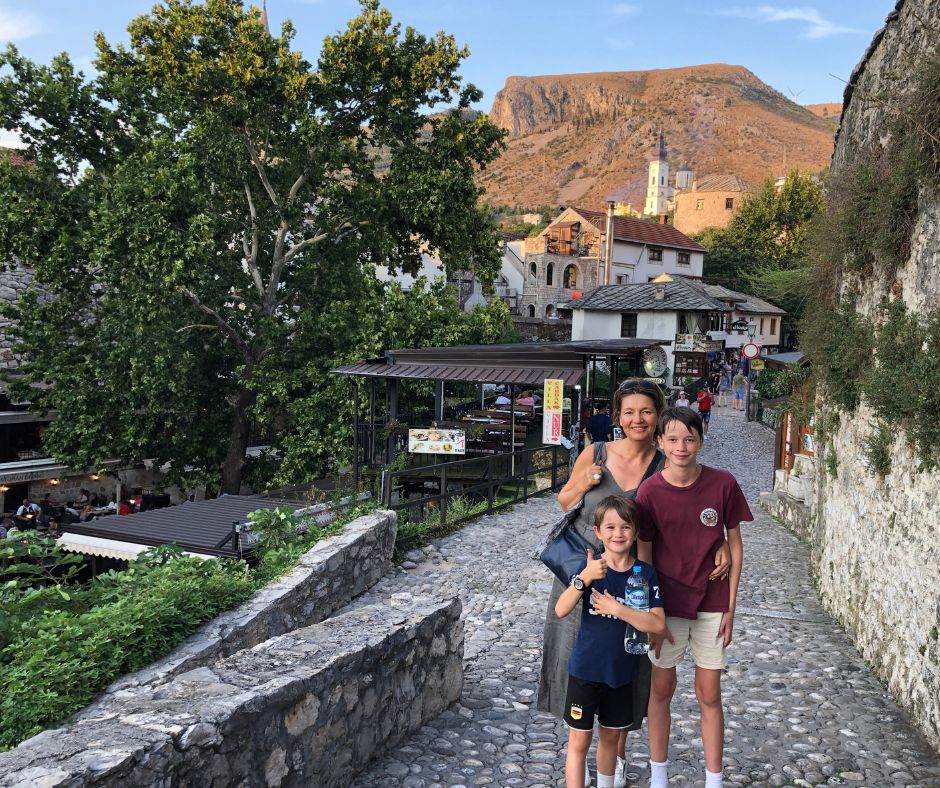
The cobble stone pathway that leads to Crook Bridge
Mostar: Bosnia & Herzegovina Extension
From Makarska, we headed inland across the border into Bosnia & Herzegovina, making our way to Mostar, and this turned out to be one of the most memorable stops of the entire trip. The drive itself marks a clear shift in landscape and atmosphere. \The coastal blues of Croatia slowly give way to mountains, rivers, and inland towns, and by the time you reach Mostar, it already feels like you’ve entered a completely different part of the Balkans. We absolutely loved Mostar. The city has a raw, emotional beauty to it, centred around the iconic Stari Most (Old Bridge), which arches dramatically over the emerald-green river below. Watching locals dive from the bridge was one of those surreal travel moments that stays with you long after you leave, not as a staged attraction, but as something deeply embedded in local culture and tradition. One of the best experiences we had here was joining a free walking tour, which gave real context to the city’s history, architecture, and recent past. It added a layer of meaning that we would have completely missed otherwise and helped us understand why Mostar feels so layered and complex compared to coastal Croatia. What stood out just as much as the landmarks, though, were the people. There was a warmth and openness here that made the city feel incredibly welcoming. If there’s one tip we’d strongly recommend, it’s this: Go early, really early. Walking through Mostar’s Old Town around 6am was unforgettable. The streets were completely empty, the light was soft, and there was a rare sense of stillness before the crowds arrived. It felt almost unreal compared to the busy, tourist-heavy atmosphere that builds later in the day. In many ways, that early morning walk became our favourite memory of Mostar, peaceful, quiet, and completely different from the version most people experience.
Why Mostar is included in a Southern Croatia road trip
- Famous Stari Most (Old Bridge) and river setting
- Deep cultural contrast to coastal Croatia
- Easy inland extension from Makarska
- Free walking tours add powerful historical context
- One of the most atmospheric old towns in the Balkans
- Works perfectly as a bridge between Croatia and Montenegro
Mostar is more than just a stop between countries. It acts as a transition point in the journey, shifting the trip from Croatia’s coastline into the wider cultural landscape of the Balkans. Related Guides: Why Mostar Should Be on Every Traveler’s Balkan Bucket List Discover Mostar’s Soul: An Unforgettable Free Walking Tour
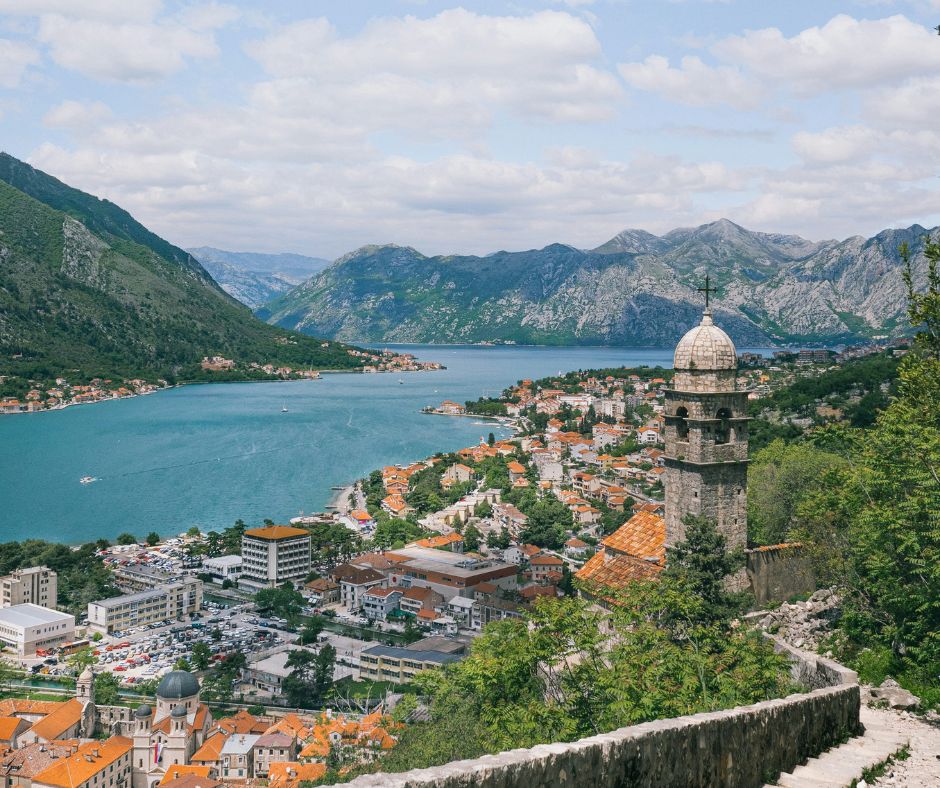
The view of the Bwy of Kotor. heading up towards the Kotor Fortress
Montenegro: Budva Base, Kotor Bay & Coastal Escapes
After exploring Mostar in Bosnia & Herzegovina, we continued our journey south and crossed into Montenegro, where the coastline shifted once again, this time into something more dramatic, rugged, and almost cinematic in scale. We based ourselves in Budva, which ended up being the perfect central point for exploring the Montenegrin coast. From here, everything felt accessible, old towns, mountain-backed bays, and some of the most striking coastal scenery of the entire trip. Montenegro felt like a natural continuation of Croatia, but with a slightly different rhythm. Less polished in places, more raw in others, and with landscapes that feel compressed between towering mountains and the Adriatic Sea.
Budva: Our Base on the Montenegrin Coast
Budva was where we slowed things down for a couple of days and used as our base to explore the surrounding coastline. At first glance, Budva feels lively and busy, a mix of beach culture, nightlife, and old town charm packed into a relatively small coastal area. It has energy, especially in peak season, but it also works incredibly well as a base for day trips. What stood out most was how practical it was. From Budva, you can reach most of Montenegro’s highlights without long travel times, which made it ideal for the way we were travelling.
Kotor: The Standout Moment of Montenegro
If there was one place in Montenegro that completely exceeded expectations, it was Kotor. Arriving in Kotor feels like entering a different world. The town sits inside a deep, mountain-enclosed bay, and the scale of the landscape is almost difficult to process at first. Steep cliffs rise directly from the water, framing the old town in a way that feels both dramatic and enclosed. We spent time wandering through the Old Town of Kotor, which is full of narrow stone streets, small squares, churches, and hidden corners that seem to appear unexpectedly as you walk. What makes Kotor so special isn’t just how it looks, it’s the atmosphere. There’s a sense of history everywhere, but also a quiet energy as travellers and locals move through the same compact space. It’s one of those places where you don’t need a plan. You just walk.
Sveti Stefan: The Viewpoint Stop That Feels Unreal
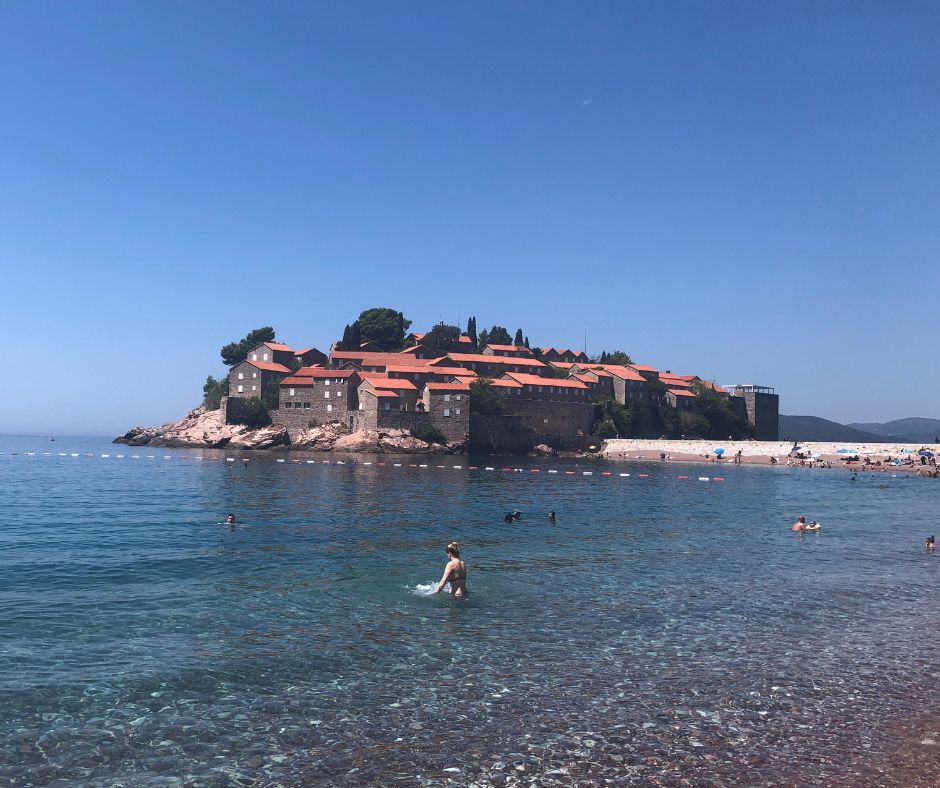
On the drive along the coast from Budva, we stopped at Sveti Stefan, one of Montenegro’s most iconic sights.
The island itself is a private resort and not accessible, but the viewpoint from the mainland is what makes it worth stopping for.
Seeing the small island connected to the coast by a narrow strip of land, surrounded by deep blue water, feels almost surreal in person.
It’s not a place you spend hours at, it’s more of a pause point.
A moment to take in just how dramatic the Montenegrin coastline really is.
Sometimes the best travel experiences are the ones you simply stop and look at.
Jaz Beach: A Slower Moment by the Sea
One of the more relaxed stops near Budva was Jaz Beach, a wide stretch of coastline that feels noticeably more open compared to the busier parts of the region.
After days of exploring towns, border crossings, and viewpoints, Jaz Beach gave us a slower moment — somewhere to simply sit by the water, swim, and reset.
It doesn’t have the same visual intensity as Kotor or Sveti Stefan, but that’s exactly what makes it valuable in a route like this.
It balances out the busier, more visually dense parts of Montenegro.
Why Montenegro Works As Part Of This Route
Montenegro ended up being one of the most surprising parts of the entire journey.
It connects naturally with both Croatia and Bosnia, but still feels distinct enough to stand on its own.
The coastline is more compact, the landscapes more dramatic, and the travel distances short enough that you can see a lot in a few days without rushing.
In the context of our route — Makarska → Mostar → Budva → Kotor → Dubrovnik — Montenegro acts as a kind of final coastal crescendo before returning to Croatia.
Related Guides:
Budva, Montenegro: Beaches And History, You Just Can’t Miss
Family Adventures in Kotor: Boat Trips, Castles & Stunning Views.
Sveti Stefan: Relaxing, Swimming & Soaking in the Views.
Jaz Beach: The Ultimate Guide to Montenegro’s Coastal Paradise
Starting our trip around the Old Town
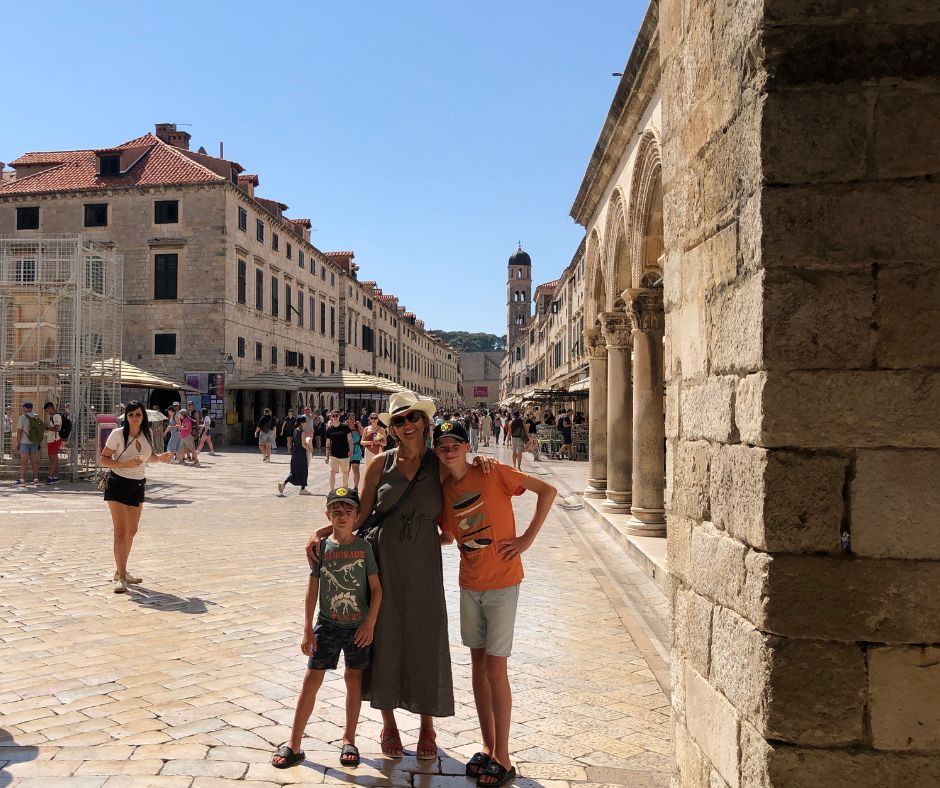
Starting our trip around the Old Town
Southern Croatia Part B: The Southern Adriatic
The second half of our journey took us beyond Croatia into Mostar in Bosnia and Herzegovina and Budva, Kotor, Sveti Stefan, and Jaz Beach in Montenegro before returning to Croatia.
We finished the trip based in Mlini, a peaceful seaside village just outside Dubrovnik, which provided the perfect base for exploring Dubrovnik’s Old Town while avoiding the crowds and higher accommodation costs of the city itself.
This section of the itinerary offered a fascinating mix of cultures, dramatic coastal scenery, and some of the most memorable experiences of our three-week Balkan adventure.
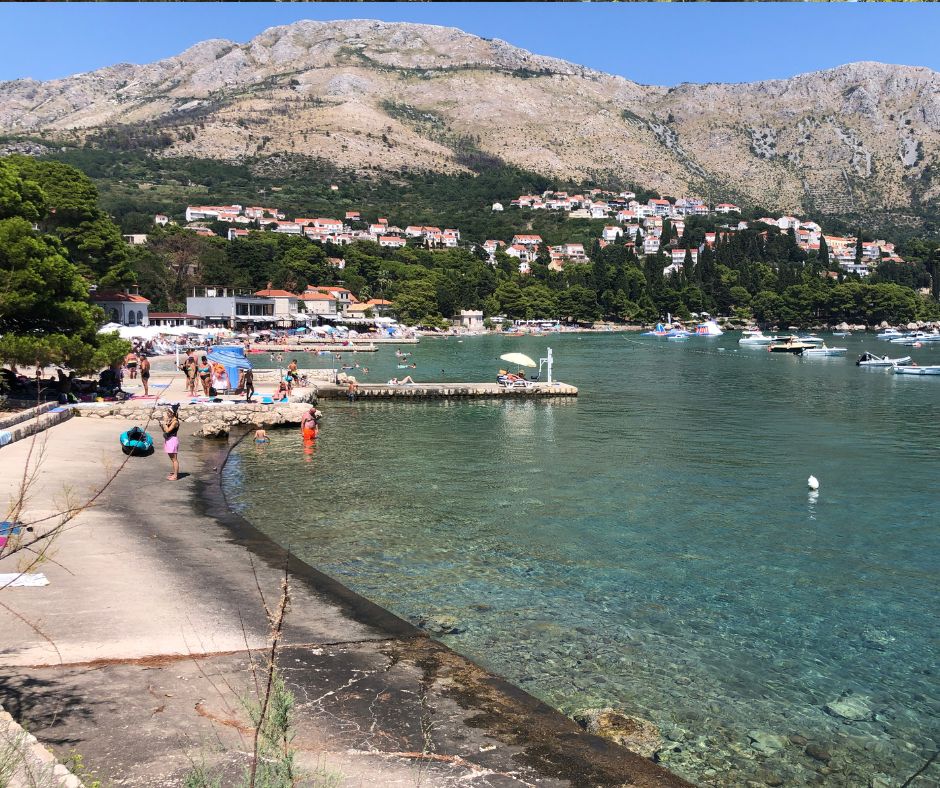
View from Mlini marina towrds Srebreno Beach
Mlini: A Quiet Coastal Escape Near Dubrovnik
After our time in Budva, Montenegro, we made our way back across the border into Croatia and settled in Mlini, where we spent the final few days of our journey.
Located just south of Dubrovnik, Mlini feels like a completely different pace compared to the intensity of the city.
It’s a small coastal village that hugs the Adriatic shoreline, with calm waters, small beaches, and a noticeably more relaxed atmosphere.
It quickly became the perfect place to slow down after weeks of travelling through Croatia, Bosnia, and Montenegro.
What stood out immediately was how peaceful it felt. Even in peak travel season,
Mlini never had the crowds or pressure you often associate with nearby Dubrovnik.
Instead, it felt like a local seaside escape, quiet mornings by the water, slow walks along the coastline, and uninterrupted views of the sea.
One of the best parts about staying here was the convenience.
From Mlini, it’s easy to reach Dubrovnik whenever you want without staying in the middle of it.
You can take a short ferry ride along the coast or hop on a local bus directly into Dubrovnik, which makes it an ideal base if you want flexibility.
This balance, close to everything, but removed from the chaos, is what made Mlini such a strong final stop on our trip.
Why stay in Mlini?
- Quiet alternative to Dubrovnik accommodation
- Beautiful, uncrowded coastal beaches
- Easy ferry or bus access into Dubrovnik
- Relaxed village atmosphere
- Perfect wind-down location after a Croatia road trip
- Scenic Adriatic coastline without the tourist pressure
Related Guide:
Mlini: Perfect for Families Looking to Escape the Crowds
Mlini ended up being the perfect place to close out our journey, a quiet contrast to the energy of Dubrovnik and a reminder that sometimes the best stays are just outside the main destinations.
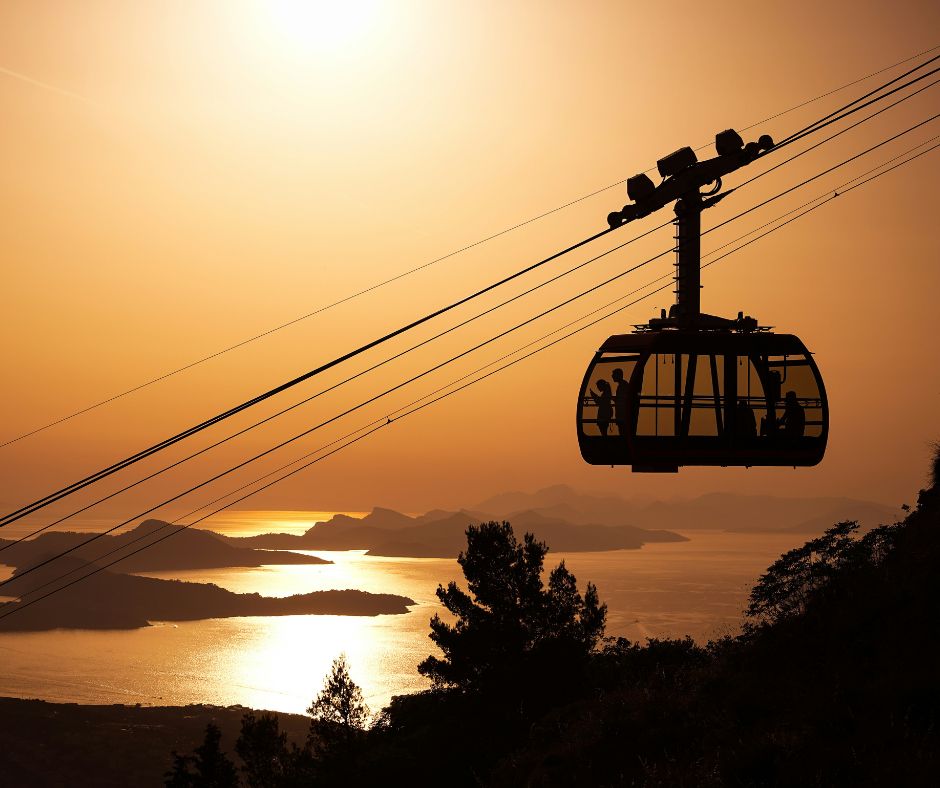
Dubrovnik cable car
Dubrovnik: A Day Inside the Walled City
From our base in Mlini, we made a day trip into Dubrovnik, one of the most famous cities on the Adriatic coast and a highlight many travellers build their entire Croatia itinerary around.
Arriving in Dubrovnik, it’s immediately clear why it has such a global reputation.
The moment you approach the Old Town, the massive stone walls, red rooftops, and deep blue sea create a dramatic contrast that feels almost cinematic.
We spent the day exploring the Old City, wandering through its narrow limestone streets, hidden alleyways, and historic squares.
Despite the number of visitors, there are still moments where you catch glimpses of local life tucked between cafés, side streets, and residential corners inside the walls.
One of the standout experiences was taking the Dubrovnik Cable Car up to Mount Srđ.
The ride itself is short, but the view at the top completely changes your perspective of the city.
Looking down over the Old Town, the Adriatic coastline, and nearby islands gives you a full sense of how perfectly positioned Dubrovnik is on the coast.
It’s one of those viewpoints where you naturally slow down and just take it in.
After spending several hours exploring, we returned to Mlini in the evening, which, in hindsight, made the experience even better.
Instead of staying in the busy centre, we were able to step back into a quiet coastal setting just a short ride away.
Why visit Dubrovnik on a day trip?
- UNESCO-listed Old Town surrounded by massive city walls
- Atmospheric limestone streets and historic architecture
- Cable car ride to Mount Srđ for panoramic views
- One of the most iconic cities in Europe
- Easily accessible from nearby coastal bases like Mlini
Dubrovnik felt like the perfect final highlight of our Southern Croatia journey, impressive, busy, and unforgettable but even more enjoyable knowing we could return each day to the calm of Mlini.
Related Guides:
Exploring Dubrovnik as a Family: What We Loved (and Skipped)
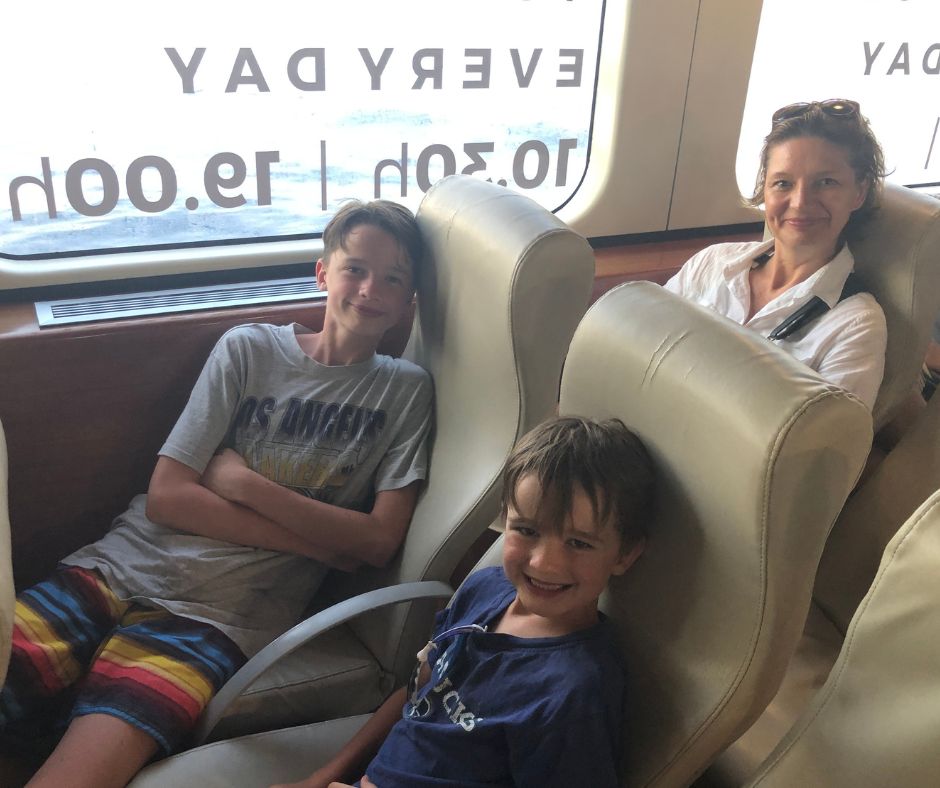
Relaxing inside the ferry after a great day
Travelling Through Southern Croatia, Bosnia and Montenegro
One of the key things that shaped this entire trip was how we actually moved through the region.
Over the course of three weeks, we travelled along the Dalmatian Coast and into the Balkans using a combination of buses and ferries, rather than renting a car or relying on flights between destinations.
What stood out most was how easy it was to travel this way.
Croatia, Bosnia and Herzegovina, and Montenegro all have well-developed intercity bus networks, making it simple to move between towns and countries without stress.
Buses can be booked online in advance or directly at bus stations, and in our experience they were generally reliable, comfortable, and ran on good schedules.
This slower style of travel made the journey feel more immersive.
Instead of rushing from place to place, we experienced the region in natural segments: coastal towns, inland crossings, and island connections, each with its own rhythm.
Getting around Croatia, Bosnia and Montenegro by bus
Buses were our main form of transport between destinations like Zadar, Trogir, Split, Makarska, Mostar, Budva, Kotor, and Dubrovnik.
Most routes along the Croatian coast were particularly scenic.
Driving along the Adriatic means the journey itself often becomes part of the experience, with winding coastal roads, sea views, and small towns passing by outside the window.
While journey times can vary depending on traffic and season, the overall system was straightforward and easy to navigate, even when crossing borders into Bosnia and Montenegro.
Island ferries and coastal connections
Once we reached Split, the rhythm of the trip changed completely.
Ferries became essential for exploring the islands, especially for day trips and short stays.
From Split, we easily connected to places like Bol, and Zlatni Rat, with regular ferry services making island-hopping straightforward.
Travelling by ferry added a completely different dimension to the trip.
There’s something about leaving the mainland and watching the coastline fade into the distance that makes the islands feel more distinct and special.
Best time to do this route
We travelled this route over three weeks, which gave us enough time to experience each destination without rushing.
The best time to do a similar journey is generally:
- May–June: ideal balance of weather and crowds
- September: warm seas, fewer tourists, relaxed atmosphere
- July–August: busiest period, but best for full summer energy
For this type of multi-stop journey, shoulder seasons (May/June or September) work especially well because ferries, buses, and accommodation are easier to manage, and destinations like Dubrovnik and Split are far less crowded.
Final Thoughts
Travelling this route over three weeks gave us the space to experience Southern Croatia, Bosnia, and Montenegro in a way that felt connected rather than rushed.
Instead of flying between destinations, we relied mainly on a combination of buses and ferries, which shaped the entire rhythm of the trip.
The bus journeys along the Dalmatian Coast were long at times, but incredibly scenic, while the ferries from Split to the islands added a completely different perspective of Croatia from the water.
Looking back, this slower style of travel is what made the trip feel so memorable.
Each place had time to breathe, from the early mornings in Mostar, to island days in Bol, to quiet evenings in Mlini after Dubrovnik day trips.
It also reinforced how important it is to travel light when moving this often.
We travelled the entire route with carry-on luggage only, which made border crossings, bus changes, and ferry transfers far easier than they would have been with checked bags.
From a practical side, we also kept everything simple financially and logistically.
We used a Wise travel card throughout the trip, which made spending across multiple currencies (Croatia, Bosnia, and Montenegro) seamless and avoided unnecessary conversion fees.
This route also connected back to a bigger travel lifestyle for us, how we plan longer-term travel, including positioning trips like this within broader international travel routes and flight strategies from New Zealand.
Disclosure: This post might contain affiliate links. This means I might receive a small commission if you click and purchase something. Clicking on these links will not cost you anything, however it helps me to keep my website running. For more information click on our disclosure policy.
Meet the family
We are a family of 4 living in New Zealand. I’m a teacher (great profession for traveling) and my wife Connie works in project management. We are also proud parents of two travel-loving boys.
Search
________________________________
Follow Us
________________________________

Subscribe to our Newsletter
________________________________
Recent Posts
________________________________


Scott - 4 Degrees of Destination
_______________________________
Hi, I've been fortunate enough to have travelled for over 25 years. My parents gave me the travel bug when I was 10 years old by taking my sister and I to the USA and Mexico for two months. I've travelled by myself, with mates, with my wife and now as a family of four. My goal is to inspire our families to get out and see the world.
